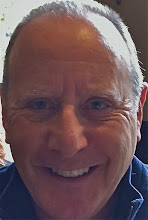
I never met Rabbi Yoshiyahu Yosef Pinto nor have I ever attended his shiurim. I am however aware of his reputation and depending on whom you ask will determine whether he is the incarnate of Rasputin or the Baal Shem Tov. I am aware of the anecdotal lore of how the powerful and wealthy, real estate moguls, captains of industry and the sports elite seek his advice and counsel before making their final business/investment decision as though he had a crystal ball. I believe King Saul committed a similar kind of sin when he sought out a seer in the hope of communicating with Samuel. I have never bought into the idea of seeking out b’rachot because theologically, from a Lithuanian, non-Sephardic, non-Hassidic, non-kabbalistic, but Maimonidian perspective I was taught to depend on intellect rather than arbitrary b’rachot. Study and keen intellect was the antidote to the talisman, amulets and shaman of the traditional mystics and mekubalim and baalei shem tov. Seekers of b’rachot is akin to those who would consult their horoscopes prepared by trained, well-known astrologers. Believing in the likes of baalei shem tov and those like Rabbi Pinto is akin to believing in homeopathic medicine versus traditional science based medicine. Homeopathy doesn’t really do any good and may even be harmful if misused. In a word, Pinto may not be as benign as he appears to be.
The Wall Street Journal as did the Forward carried an interesting article (Forward, March 25 2011, “Revered as Business Guru, Rabbi Faces Questions About His Organization’s Finances”) which raises question about the good rabbis enterprise. Why am I not surprised? After all, our Jewish past is checkered with charismatic rabbis who had a talent for exploiting the foibles of the community. Just to name a few there was Jacob Frank and Shabtai Tzvi who by dint of their charisma and the need for people to believe in something uplifting managed to scam a sizeable number of the communities that they reached. More recently, Mordechai Gafni, although on a smaller scale managed to scam thousands of Jews and Jewish leadership as well, through his charisma and warped ego; had he not gone unchecked he would probably have morphed into a rebbe dispensing b’rachot.
I am not suggesting that Rabbi Pinto is a con man, chalila v’chas nor is my intention to impugn the ‘mekubalim” who have a revered and honored place within our tradition. These are saintly men who while not necessarily charismatic, or seek out the adulation of the masses and their wealth, have a profound spiritual centeredness that is influential amongst a small but important segment of the Jewish community, Sephardim included. Because of their profound spiritual grounding they have traditionally spurned the “gashmius” as negative energy as opposed to their positive energy, “ruchnious”. Unfortunately many who seek out these mekubalim are in search of simple answers rather than taking the difficult approach of “hasmadah”, requiring hard work and significant investment in time, and because they have chosen a shortcut financed by money, they are ultimately the worse for it. Nothing beats the long hard journey of learning, development and self-awareness, not even the b’racha of a mekubal.
There are others of course, looking for an angle and a way to capitalize on this niche market have given a bad name to the mekubalim. Rabbi Yirael Abuhatzeira whose photograph hangs in my study was a saintly man revered by the Moroccan community in Israel and abroad and fondly known as the Baba Sali. In the tradition of those who came before him, he never sought notoriety, wealth or comfort. His son, Baruch, an ex con, on the other hand saw some good possibilities and when his father died assumed the mantle as Baba Baruch. So much for the saintly scholars pouring over archaic esoteric texts for the sole purpose of enriching those in need of his special insights rather than vice versa.
Behold, another Tzadik appears on the scene, Rabbi Pinto (related to the Baba Baruch / Abuhatzeira family on his mother’s side), who may or may not be a serious mekubal. Red flags however, do pop up when perusing his profile. Pinto is known as an advisor to real estate moguls, yet Pinto’s personal business interests and investments are shrouded in questionable dealings and foreclosures. In addition, while Mekubalim trend towards modest lifestyles due to their spiritual centeredness, this man’s flamboyant lifestyle raises many more questions. As in all religious institutions his too is a non-profit, never mind the fact that his Manhattan townhouse valued at 6.5 million dollars is facing foreclosure. Although the institution is not for profit it doesn’t carry the elementary, but legally required workers compensation insurance. His CFO speaks no English and has no idea how many employees they employ. None of this meshes with his reputation as a business “iluy” or the “hard sell” strategies for fund raising they use. For example, the rabbi will send via messenger an expensive religious article i.e. silver candlesticks (originally a gift to the rabbi who passes it on as a gift) to a new potential follower (donor) explaining that the rabbi has blessed the candlesticks. A day or two later there is a visit by one of his staff asking for a donation of a specific amount i.e. 10,000.00 dollars. When Pinto travels to and from Israel he flies first class. The list goes on and there really is no precedent for this kind of cavalier behavior by past reputable mekubalim leaving one to question his veracity.
When I consider the richly textured legacy of our past spiritual leaders whether Ashkenazi, Sephardic, Misnaged or Hassidic the seam of “ruchnious” runs so deep and so wide, penetrating the soul of our people that there is virtually no space left for the “gashmius” that Pinto seems to crave. It wouldn’t be that disturbing other than the fact that he is so public about it and flamboyant that it is worth noting. Unfortunately and regrettably when I think of Rabbi Pinto one of the first thing that come to mind is the Ford Pinto of the 1970’s, which appeared like a bat out of hell; in its first year selling over 100,000 cars – a real winner. The intention of the Ford Motor Co. was to design a car to compete with the popular Volkswagen and the Toyota. Toyota and Volkswagen are still here, selling well. Who remembers the Ford Pinto?
Monday, March 28, 2011
Monday, March 14, 2011
Tunnel Vision
In an atmosphere and time when there is little civility between competing ideas, and ideologies I attended a remarkable conference honoring Professor Eliezer Berkovits who committed his life to bridging the gaping abyss that divide Jews on a myriad of theological issues. Ahead of his time he introduced new approaches to the pressing issues of conversion and agunah with the intent of closing the gap and creating understanding and unity. He engaged all the streams of Judaism with the respect dignity and civility that they deserved. Each of the presenters at the conference illuminated a different facet of his life, writings and teachings, creating an uplifting transcendent experience that gives me hope that there exists other like minded souls working to achieve similar goals, engaging and persuading with equanimity, civility and respect.
Not too long ago another conference was held in Israel regarding the pressing, dire issue of conversions; attempting to develop consensus among the various religious ideologies within the orthodox stream. Poignant and compelling was the lecture presented by Aryeh Edri, professor of law at Tel Aviv University who is among other things a scholar of halacha and its development. What impressed me beyond his erudition of the laws of conversion and the responsa through the ages was his approach, which in many ways paralleled Professor Eliezer Berkovits.
Both men sought a mechanism by which the conversion candidate would enter into a process that was embracing and nurturing, resulting in a modality that would enhance ahavat yisrael and contribute to achdut ha’am. As it is, the rabbinate responsible for conversions has subverted these lofty goals, causing irreversible damage to the fabric of our society and culture. One example is the recent incident of a chayal, killed in the line of duty, defending his country that was appropriately buried in the local cemetery with military honors. When the rabbanut discovered that his conversion wasn’t valid as per their standards the chayal was disinterred and buried in a gentile cemetery, traumatizing the family, causing unnecessary pain, emotional stress and scarring. It was an act unfitting for a civilized person, unbecoming of a Jew, much less a rav. It was barbaric and uncouth revealing an undercurrent of contempt and disdain for anyone not in tandem with their way. It was the determination of a rabbinate long ossified, buried up to their eyeballs in arcane, pilpulized and corrupted halachic minutiae resulting in a class of rabbis numb to humanity and the people whom they serve. For anyone who takes these developments seriously it seems as though these putative spiritual leaders are living in a dark noxious cave, of which one of the by products is tunnel vision; as though they never experienced the crucible of the renaissance.
Aryeh Edri’s lecture was the burst of fresh air needed to expunge the toxicity of the cave dwellers. His well-crafted presentation cited relevant responsa, each, a point of light and combined illuminating a pathway out of the morass. Using the Rambam as a springboard he referenced his position regarding kabbalat mitzvoth as secondary in the conversion process. Important isn’t the kabbalat mitzvoth as much as the renunciation and rejection of the candidate’s current religious beliefs and practice. Edri pulls from Harav Shlomo Dichovsky who referenced the Ritva maintaining that kabbalat mitzvoth are of secondary importance. Interesting and informative was the intuitive approach of early nineteenth century Rav Kluger (1785-1869) who suggested that the critical elements of conversion was the tevila and the mila stipulating that kabbalat mitzvoth ought to be the result of a positive conversion, not a condition.
Another interesting consideration that rabbis concern themselves with is the motivation behind the conversion. Conventional wisdom held that the motive had to be pure; converting for the convenience of marriage was unacceptable. Rabbi Chaim Ozer Grodensky (1863-1940) didn’t concur with this position and approached the issue with amazing sensitivity. Confronted with the situation of a woman seeking conversion while married civily to a secular Jew revealed the boldness of his p’sak. He maintained that kabbalat mitzvoth weren’t to be understood as literally fulfilling the mitzvoth but rather to be understood as agreeing in principle to those mitzvoth without necessarily keeping them. With that assumption in mind he assessed the conversion candidate as a “choteh l’teavon”, a person who understands that the mitzvoth are essential, but due to habit and weak character aren’t able to fulfill them. Harav Kook, according to Edri concurred with this approach stating that there are no thought police in Judaism; someone declaring that they accept the idea of kabbalat mitzvoth is sufficient without demonstrating their fulfillment of the mitzvoth. Harav Unterman (1886-1976), a past chief rabbi agreed with Grodensky and Kook stating that the candidates intent of honoring the kabbalat mizvot is sufficient for the process of conversion to go through to completion.
The list of poskim over the generations confronted with these weighty problems is numerous. What is new is the manner in which the conversion process is being handled today. Many poskim of previous generations sought solutions that would maintain the integrity of halacha but at the same time enhance shalom bayit and achdut. Today there seems to be posturing among competing factions to see who can be more machmir and thus more divisive. What is difficult to accept is this parochial position which has become the norm in light of the fact that there is enough halachic case precedent for the current rabbinate to seek solutions that are halachically sound but reflect the best in us as a people: love of humanity and love of Israel.
It was achdut that guided Eliezer Berkovits, seeking to build consensus rather than to engage in derisive confrontation. To be certain, there are legitimate poskim who disagree with these conciliatory approaches to conversion. In previous generations when poskim displayed sensitivity to these issues of conversion, it was on the sociological background of a society that experienced limited exposure to intermarriage. Our generation’s problems have become more complex because of the staggering rate of intermarriage, the exploding rate of assimilation and the fact that we have an independent state with the influx of hundreds of thousands of immigrants who were disenfranchised from normative Judaism for generations. We can’t afford the luxury of being confrontational and divisive especially in view of the fact that Israel isn’t the shtetl, and in consideration of the personal tragedies experienced daily as a result of an uncaring, corrupt rabbinate whose piskei halacha are enveloped in corrupt politics. Every generation has its challenges; we have ours today and it becomes our collective responsibility to navigate these troubled waters as best we can.


Monday, February 28, 2011
Shtiebel Yidden
Surfing the news during the past few weeks I kept on tripping over an unfamiliar term “Indie Minyans”. It seems as though these Indie Minyans have been popping up all over like mushrooms after a summer rain. I had no idea what an Indie Minyan was. True, I could have googled it sooner than later and I would have filled another gap in my education. Disappointedly I learned that Indie Minyans (minyanim would be grammatically correct) was no more than an independent minyan; a start up minyan that I’d been witness to (and in some cases helped start) all my life. Succumbing to reading several articles on the subject I was a bit perplexed with the thought that the subject was being treated with as much gravitas as one would treat the possible fallout from the Egyptian junta. As I understand it the Indie Minyan, may or may not be affiliated with a movement, denomination or umbrella synagogue. Each one is unique in their makeup, hashkafa (if I may use the term), ritual and tradition. Some may be egalitarian, others more traditional. The most important thing however is that it is the story of people of like mind and kindred spirits coming together to daven. They have intentionally started their indie minyan because the trappings of the classic synagogue structure that include the paid professionals aren’t really necessary or essential for their purpose.
The Indie Minyanim are an expression of a Jewish renaissance after the excesses of the past few decades that resulted in a gaping spiritual lacuna after the heady spiritual days of the 1960’s-1970’s that had given birth to the chavurot. What happened to the chavurot is the subject of another posting, but what interests me regarding the Indie Minyanim is the lack of perspective surrounding these minyanim. To be sure, most of the Indie attendees are plugged in to Jewish life, and Jewishly educated. Perhaps what was lacking was the spiritual connection that rounded out their Jewishly lived lives. They sought out and obviously created that spiritual vortex, accompanied with the warmth, friendship and kindred spirits that only an Indie Minyan can provide. I am flummoxed because there is nothing new in this. Its been going on for generations.
Many of the participants have the mistaken notion that the Indie Minyan is something novel, groundbreaking, and perhaps even reactionary. One blogger’s description of the concern of the affiliated Jewish community is that “those who participate in Indie Minyans are living off the grid of Jewish life.” It seemed that she agreed with that assessment. I can understand the concern of the establishment because in truth they are loosing some of the precious and scarce market share – the best of that market share. They are loosing the rare, knowledgeable and committed Jews, the ones that care. What remains then of the market share are the three day a year Jews, those not as committed, those perhaps not as intellectually challenged by the issues confronting the Jewish world today. Like any retail establishment assessing their competition, they are deeply troubled with diminishing revenue, the grist that fuels there overinflated overhead, whopping salaries and mega mortgages. They are looking at the questionable future sustainability of their monolith, given the success of their competition and their diminished membership rolls.
But I take exception with those bloggers who agree that they are living off of the Jewish grid. On the contrary; they are living on the grid. They are smack dab in the middle of the grid where they belong. They are the Shtiebel Yidden of the 21st century. The shtiebel yid has always been part of the Jewish spiritual experience and was never assessed as being off the grid. Where I grew up there was a plethora of Indie minyanim, shtieblech, each with their own customs and traditions. Some were hassidish others were litvish. What they all had in common were the kindred spirits that peopled these small intimate sites, gathering there three times daily.
Entering a shtiebel in 1955 was probably different than entering an Indie Minyan of 2011. However they shared the same impulse to opt out of the mammoth, overpowering, architecturally flat buildings run more like corporations than intimate spiritual space where one can feel his Jewish neshama hyper-beating, aching to express itself. Stepping into a shtiebel in 1955 was like stepping into a time warp, my grandfather’s litvishe world. Participating in an Indie Minyan is reaching out to community of like-minded seeking its nexus to history while at the same time staying connecting to the present tense.
The proliferation of Indie Minyanim gives me hope that the tension between Keva and kavanah is being addressed with resolution happening for some already. But to secure that resolution will require more than the mushrooming of ad hoc Indie Minyans. It will require the serious commitment of Jewish leadership to rethink the current way the Jewish community is structured, its funding and allocation priorities.
Tuesday, February 22, 2011
Dying: A Postmortem
Rabbi Gil Student recently hosted a symposium on his blog Hirhurim on the “Ethics of Brain Death and Organ Donation”. I am grateful for his effort because it brought renewed focus on a very sensitive area that few of us are familiar with. The intricacies of Jewish Law, which come into play, are varied and nuanced; presenting the issues are important since ultimately we are all affected. Apparently he invited eight scholars to contribute to the discourse and after reading them it became apparent that while it was interesting, unfortunately it didn’t present any earth shattering new information in the field. Most of the participants referenced the known recognized halachic stars and poskim of the 20th-21st century, i.e. Rabbis S.Z.Auerbach, E.Waldenberg, A.Soloveitchik, Y. Elyashiv, J.D.Bleich and others. Some of the contributors were more articulate than others, none of them really zeroed in deftly on the ethical questions involved. There were two however that triggered some red flags when they slid into the area of “give-get”, but that I’ll get into later. Another concern was clarifying the real purpose and intention of the symposium. After all this has been a dead issue since at least 1986 when The Chief Rabbinate Council of Israel on Transplants ruled and again in March 2008 when a law was passed in the Knesset regarding the matter. Another disappointment in these scholars was their avoidance of ethical considerations, while relying upon halacha as though it existed in a vacuum.
My assumption is that the recent deliberations and report of the RCA Vaad Halacha, (committee on Jewish Law) on whether BSD (brain stem death) is an halachically acceptable standard regarding organ donation was what preempted the symposium. Troublesome isn’t the content of the report, but the fact that there was any need to issue a report. After all, the RCA isn’t a hareidi rabbinic organization, and has usually been in tandem with the Chief Rabbinate of Israel. I would assume that if the decision of the Chief Rabbinate going back to 1986 was to accept BSD as an halachic criteria for death than the issue ought to be laid to rest for at least that community of centrist and modern Orthodox rabbis. Oddly however was the fact that some of the respondents in the symposium were of the right wing, including Agudah apparatchiks who would never agree with the Chief Rabbinate of Israel – on anything.
The other issue I have is with the few who risked wading into the area of medical ethics and the ethical decision-making process. Frankly I was shocked at the temerity and lack of sensitivity of two of the scholars who exploited the proverbial halachic loopholes in order to benefit from the transplants while at the same time ruling that BSD can be ruled on not only as murder but double murder. Rabbi Avi Shafran, Dir. Of Public Affairs for Agudath Israel of America reasoned the following: “Can a potential recipients religious beliefs…constitute valid grounds for penalizing him…? Legally speaking, denying someone a transplant simply because joining an organ donation system would force him to dishonor his religious beliefs would…amount to curtailing his constitutional rights….”
Shafran’s ethical standard on the subject leaves something to be desired. In a society where organs are in short supply and limited, and people are asked to participate on a “give-get” basis, it would stand to reason that those who do participate ought to benefit before those who refuse to participate. No one is being coerced, and no ones religious freedoms are being trampled upon. However, the decisions we make do have consequences. Choosing to live apart, for whatever the reason, whether it is personal convictions or religious belief doesn’t entitle one to reap the same benefits as those who choose to participate and contribute. If one decides not to participate in “give-get” he ought to be prepared to forego a possible transplant, isn’t that what standing on principles really mean: to talk the talk and walk the walk. The ethics of “give-get” become even more convincing when we also consider the normative halachic practice in Israel where BSD is an accepted clinical criterion of declaring someone dead. In spite of the responsible and sagacious advise of the Chief Rabbinate, if one decides to choose to listen to his local rabbi and opt for the heartbeat criteria instead of BSD, the consequence ought to be clear.
Heartening was the revelation that there were some excellent contributors to the symposium where their input helped clarify some of the issues. Disheartening was the fact that there are still those out there that can’t accept direction, leadership and cues from the established and recognized weighty rabbinical courts in Israel that reflect the consensus of the mainstream rabbinate and the backing of the Knesset and majority of Jews. The missed opportunity of fulfilling Isaiah’s words of Ki Mitzion Tezeh Torah (Isaiah 2:3); their application in real time, here and now is disappointing. Disheartening, of course are those participants who while they are seen as poskim haven’t honed and refined one of the tools that make the difference between a good posek and a great posek: the ability to arrive at halachic decisions not only by mastering text, but by integrating their cognitive / analytical halachic skills with a sensitivity to the ethical teachings unique to living and dying Jewishly.
Monday, February 14, 2011
K’rov Yisrael: A New Hybrid
In 1984 Rueven Bulka, a well respected orthodox rabbi wrote “The Coming Cataclysm” in response to the game changer of the Reform Movement recognizing as Jews those offspring from patrilineal descent. Bulka predicted a growing chasm between those who followed matrilineal descent (as halacha dictates) and those that accepted patrilineal descent. The Jewish community would be forever fractured with a fissure so deep and so wide that it would be all but impossible to bridge. That cataclysm of which Bulka spoke never came to fruition: we are still one people (participating in the same organizational institutions that navigate Jewish communal life and advocating for Israel) with periodic adjustments made for accommodation. Most cities with a federation have a board of rabbis whereby the Orthodox rabbis participate alongside the Reform Conservative and Reconstructionist for the common good and welfare of the Jewish community, patrilineal Jews not excluded (some of these rabbis may not even be halacically Jewish). From their point of view the Reform Movement’s decision was smart and justifiable. Concerned with increasing intermarriage and dwindling synagogue membership and participation they sought ways of inclusion. The patrilineal option seemed the way to go. That, together with proactive programs and an agenda of inclusion and out reach to the intermarried might staunch the bleed.
Apparently the hemorrhaging in the liberal community hasn’t been cauterized, even with the seemingly extreme maneuver of instituting patrilineal descent; on the contrary, it’s intensified. While not accepting patrilineal descent the Conservative Movement has hit on a somewhat unique and creative response to dwindling membership: the creation of a hybrid Jew known as a K’rov Yisrael. The K’rov Yisrael is somewhat of an avatar: a shadow figure. He has the perks of being married to a Jew without any of the responsibilities incumbent on a Jew. He’s got the best of both worlds: a shadow like figure he can phase in and out depending on the circumstances. Like a chameleon there are times when he will pass as Jewish and other times morphs back into the gentile. The K’rov is a gentile married to a Jew, having opted not to convert yet desiring to take advantage of and participate n the full life of the Jewish community. He has no halachic status: he is a gentile with no claims of Jewish descent either from the mother or father. He isn’t a crypto Jew, claiming Jewish-Spanish descent. He is a gentile married to a Jew, who when desires, can attend services and receive the honors associated, such as aliya latorah and other honorifics.
My initial reaction was to negate this initiative, considering it a worse “fix” than Reform’s patrilineal descent approach. Patrilineal descent initially seemed a greater threat to the integrity of the Jewish community because it tended to shade the legitimate halachic identity of Jews. Belonging to a reform Jewish community and intensely living the Jewish life with a Jewish father but gentile mother would blur the identity: he could “pass.” The K’rov, on the other hand makes no claim of being Jewish. However, his association, presence and participation gives the distinct impression that the person is Jewish. Apart from that, creating the category of K’rov sends a clear message that one doesn’t have to convert. Why go through the effort (and difficulties, including emotional distress) of conversion if one could opt for the status of K’rov? On the other hand, intermarriage with or without conversion is an accepted fact of Jewish life and no initiative will staunch the hemorrhaging of the community, and no matter what initiative the liberal community takes the issue will not go away nor will it be solved.
How we as a people welcome the intermarried will ultimately be a testimonial as to what kind of people we are. Pondering these issues, seeking some guidance I am reminded of three famous test cases that distills the essence of the issue: religion versus peoplehood. Brother Daniel, Benjamin Shalit and Shoshan Miller. While these three case refer to the Israeli Judicial system they nevertheless hone in on the issue that confronts what being a Jew means today: religion or peoplehood. In the 1960’s Benjamin Shalit, an Israeli married a non-Jewish Scottish woman. The children were recognized as Israeli, however Shalit wanted their identity cards to say “Jewish” for nationality but left blank for religion. The Ministry of Interior denied the request, however the Supreme Court ruled in Shalit’s favor: the children of a gentile mother and Jewish father were rendered Jewish. The court made a distinction between peoplehood and religion (the Law of Return unfortunately was subsequently amended to avoid this situation in the future).
If we separate our personal passions from the issue it might seem reasonable to allow this new hybrid Jew an opportunity to thrive. While the avatar doesn’t seek conversion the K’rov nevertheless demonstrates full association and identification with the Jewish community as Ruth the Moabite did. It won’t staunch the bleed but it might facilitate the integration of well-intentioned people into the Jewish community.
Signing on, as most of us have to a reasonably enlightened political/social philosophy and liberal life style has within it, unfortunately, the seeds of destruction. American Jews tend to be liberal in their weltanschauung. To be liberal is to be accepting. To be liberal is to be educated and open to new and fresh ideas. To be liberal is to allow others to learn more about who we are and what we are. Ultimately this leads to full integration, assimilation and intermarriage, not only of the liberal community but also the orthodox community. It is an unavoidable by product of being an educated Jewish American.
Tuesday, January 25, 2011
Men at Their Best
Man at His Best was the title of an essay I wrote about a year ago reflecting on the depleted presence of men in Reform pews. The feminization of Jewish life has either neutered men or driven them to other safe harbors. It is the very same reason why hareidi men in Jerusalem are vociferous, aggressive and verbally abusive when it comes to the touchy subject of women prayer services (minyanim) at the wall. Religious ritual at the synagogue or the “kotel” happens to be the last bastion, the Jewish man’s last stand, and his last frontier where he can be a man. He really has no other place to go. Now, a study has come out on the status of Jewish men in the Conservative/ Masorati movement.
In this particular study certain assumptions were made which are disturbing. For one thing, the study underscores the positive outcomes resulting from the feminization of the Conservative movement, referring to themselves now as gender balanced or egalitarian. This study rejects the premise that men resisted this new “world order”. Had they objected the study asks why is it that these men didn’t fight back, thus concluding, “if men are becoming less visible…it must be for other reasons”. The author of the study misses the point. They didn’t fight back because they weren’t able to exercise their rights. They were neutered long before they were married, most likely by their mothers at the same time that they were circumcised by the mohel. Jewish men have been programmed to be more “sensitive”, more “compassionate” and less aggressive. In short the liberal agenda filtered down to the Jewish family, making it politically incorrect to assume a stance not consistent with liberal values and politics.
Another erroneous assumption made by the author is that men absent themselves from synagogue because of their “religious incompetence”. If men, the study suggests, are given the appropriate “tools” this too can change. The author oddly likens the unschooled Jewish male to an unprepared hunter about to forage in the woods for a kill. Before going out on the hunt the hunter has to check his list of tools (the author never refers to these tools as weapons). Fascinating it is, that the author compares the Jewish man to the hunter, which is odd, since Jewish men traditionally have never been hunters and almost runs counterintuitive to our Jewish DNA. We don’t hunt for sport (against Jewish law – tsar l’baalei chaim and bal tashchit), and reluctantly for sustenance since we were meant to be vegetarians.
One could even make the case that the author of this study seems to be subconsciously struggling with the degree of potency of his “male” identity and thus, not surprisingly chose the hunter as his metaphor. The hunter, in Jewish lore is the quintessential Esau, decried and discredited in the Bible as cunning, wily, aggressive, fearless and takes what he wants. This is the polar opposite of the early paradigmatic version of Jacob, understood as the delicate, sensitive spiritual figure decidedly scholarly, effeminate and dependent on others for physical sustenance.
No matter how many studies come out, the end result will be the same: the feminization of Judaism has led to the neutering of men driving him out from his place of gathering, his natural habitat, the beit kenesset (beit midrash). They have become passive aggressive, as manifested by their absence in the synagogue as well as other programs sponsored by the community. Hareidi men must hold out and keep at bay the feminization of their cultural enclave, the last frontier of the Jewish male. They are the last male Jewish hope.
Monday, January 10, 2011
Mixed Messages
Guilt is an awful thing to bear. Sexual guilt is worse. Sexual guilt among adolescence in Israel was the subject of a recent study under the auspices of Bar Ilan University and presented at a conference on “Challenges in Jewish Education”. Imagine: a conference was held in 2011 about a subject that was beaten to death in the 1960’s and 70’s. Novel perhaps about this conference was the focus on the orthodox community. Apparently orthodox youth may be sexually conflicted and repressed. Apropos, when I was in high school, preference was to go out with girls from Bais Yaakov without of course the knowledge or permission of their parents. In retrospect it would appear that they must have been profoundly conflicted, but it never occurred to us when “in the moment”. The depth of conflict and the psychological stress was and still remains beyond my comprehension. This study certainly is revealing.
Disturbing were some of the observations underscored at the conference regarding the attitudes of adolescence to sex. For example researchers discovered that orthodox youth were disgusted by “porn” believing that god didn’t create people for their bodies to be on display, which although is a silly argument (by the same token I can argue that if god intended men to be circumcised we would have been born that way) reveals deep seated issues as expressed in their conflicts: being passionately and inexorably pulled to and attracted to natural sex, but feeling guilty about those lustful feelings.
None of this is surprising to me. It isn’t my intention to be dismissive of this community or treat them in a cavalier manner. However one of the glaring problems with this segment of the Jewish community are the mixed messages that the adolescent community receives from their parents and community. On any given Shabbat one can readily see these young adolescent girls in their shabbes best: decked out in suggestive outfits, spiked heels and coiffed like upscale call girls. You have to wonder how in the world did their parents let them step out of the house like that, unless of course they approve, which means they are enabling them and thus reinforcing the mixed message. A few years ago I posted an essay on the thrill of attending a frum wedding. The exaggerated smorgasbord was barely outdone by the over the top parade of nubile eligible (and not so eligible) women sauntering through the smorgasbord as though they were there on display and in competition with the roast beef.
Another unfortunate mixed message has begun to emerge from none other than the ultra orthodox spiritual leadership: the rabbinic establishment, which has recently begun to permit elective plastic, cosmetic surgery such as nose jobs, breast enhancement, tummy tuck, buttocks lift, liposuction etc. Hitherto it was the opinion of the ultra orthodox rabbinate that there was no need to improve upon god’s handiwork. Apparently chanting “eshes chayil” to an unflattering nose or underdeveloped bosom was inappropriate to many within the community. The rabbis, in their dubious wisdom modified their previous p’sak to now assume that god’s handiwork may be improved upon by a nip and tuck here and there. So this new and improved mother of thirty something transmorphing into a “Barbie” albeit with a sheitel, has now become the new and improved version of the “eshes chayil”, a woman of valor and the new role model for her nubile adolescent daughter.
Not surprisingly there is yet a new phenomenon among our young orthodox girls: eating disorders. In 1996 Dr. Ira Sacker studied ultra orthodox women and found that 1 out of 19 in his Brooklyn sampling had an eating disorder:
“Experts say the orthodox community is sending mixed messages to young women. Parents, matchmakers and potential mates want a svelte bride, but may shun a woman who divulged she has an eating disorder because of the stigma of mental illness. For arranged marriages among the ultra orthodox, the first question matchmakers ask is about physical appearance, including weight and the mother’s weight, which feeds the message that thinner brides are now more desirable, said Dr. Ira Sacker…”
It makes one wonder what the face of the ultra orthodox community will look like in another generation. After all, it is to the ”eshes chayil” the pillar of the Jewish family that we all look up to in holding together the values of “yisroel saba”. This study is indicative that they have embarked on a slippery slope and the matchmakers that Dr. Sacker referenced doesn’t help but rather hinders. Perhaps these ultra orthodox families ought to consider jdate.com or frumster.com or other social networking sites as alternatives to these misguided matchmakers. It makes you wonder if Mark Zuckerberg got it right when he developed face book?
Monday, January 3, 2011
Generation F
The Jewish Week (Generation F, Steven Lipman, December 28, 2010) carried an interesting, thought provoking article about the generation of Jews in their 20’s and 30’s who seem to be in search of their Jewish identity. Profiling a young mother, a Park Slope resident, Sher, was interesting although nothing revealing or earth shattering struck me. As a matter of fact, not all that long ago, the young alienated Jews 70’s and 80’s, struggled with the same issues. Then as now young people, beginning their own households were in search of a direction by which their families would be defined Jewishly. Then, they were referred to as “seekers”. And they were! It was the age of the Jewish Catalogue and other self-help books on discovering Jewish traditions and how to “do” Shabbat etc. While there is nothing groundbreaking in this article it does give a new appreciation to the opening line of Ecclesiastes “ein chadsh tachat hashemesh”, there is nothing new under the sun. What is revealing is the realization that there are so many Jews out there who are still Jewish, in spite of their parent’s generation (seekers); a somewhat lost generation searching for Jewish meaning.
With all the good intentions the article is flawed. It typifies the way institutional Judaism, such as federations and the denominations understand Judaism, and how people like Sher define herself through the prism of Judaism. For Sher as for Institutional Judaism, Judaism is defined as a religion like any other religious faith based group. As those religions offer the possibility of spirituality so too is Judaism expected to do the same. Denominational rabbis, in particular the reform and conservative pattern themselves in the same way, even referring to their work as a “ministry”. Judaism however, isn’t faith based, nor is it a religion, nor is its foundations spiritual. Judaism is peoplehood and covenantal. We are a nation, which happens to have folded within it rites and ritual by which we can express our fealty to god (for those who believe in god) and community. Up through the mid 19th century Judaism was accepted and understood universally not as a religion but as a nation. The Reform movement seeking entry and acceptance to the world at large, redefined Judaism as a religion, as any other religion. By doing this, they denuded Judaism to little more than synagogue worship and ritual, and in so doing removed the thorny issue of dual loyalty from the concerns of the overall gentile community.
One doesn’t have to believe in god to be a good Jew and a pillar of the community. One doesn’t have to believe in or attend synagogue to be a good Jew and an upstanding member of the Jewish community. One only has to read nineteenth century Jewish thinkers like Simon Dubnow, Asher Ginsburg and Isaac Peretz who argued the merits of cultural Judaism as the sin qua non of Judaism. Unfortunately, people like Sher have been taught to believe that prayer (personal, private or otherwise) is the means of expressing one’s Jewishness. That simply isn’t the case! To be committed to the Jewish community and to identify with worldwide Jewry is to epitomize a wholesome Jew. To identify with the values of the Jewish community is to find expression as a Jew. To educate one’s children in the history, art, literature, Hebrew language and customs of Israel and the Jewish people is to be a committed Jew. Attending synagogue, praying in language and style that doesn’t resonate renders the worshiper restless. Praying to an objectified god as though He was in the business of doling out and calling in favors must leave one wondering if this is what Judaism is all about. Defining ones Jewishness by synagogue affiliation and membership invariably leaves one in the state of perpetual search.
The perpetuation of the myth that Judaism is a religion of faith serves no one but those directly benefiting from it: rabbis, cantors and synagogue administrators. It is no wonder that Chabad is so successful in their work: they have reduced synagogue worship and membership to one facet of living Jewishly. It is no wonder that Shlomo Carlebach z”l, in his time was so successful in generating as generation of Jews that saw and felt the larger picture. We are a people, a nation with half of us living in Israel, and the rest of us living in the Diaspora. We aren’t exclusively seekers of things spiritual, but also of things cultural, social and political. There are those seeking and not finding spirituality in Judaism turning to other practices such as eastern meditative practices, Buddhism and Hinduism. That needn’t exclude these same people from staying within the Jewish community identifying totally and wholesomely with all things Jewish.
Generation F is no different than the flower children of the 60’s and their spin-offs, the “seekers” of the 70’s and 80’s. Seeking and searching, because they had been robbed of their birthright: understanding that being Jewish was something greater than anything religion had to offer.
Subscribe to:
Posts (Atom)